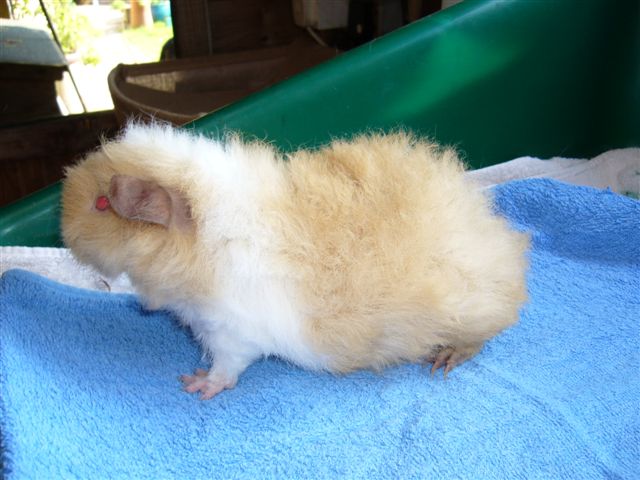
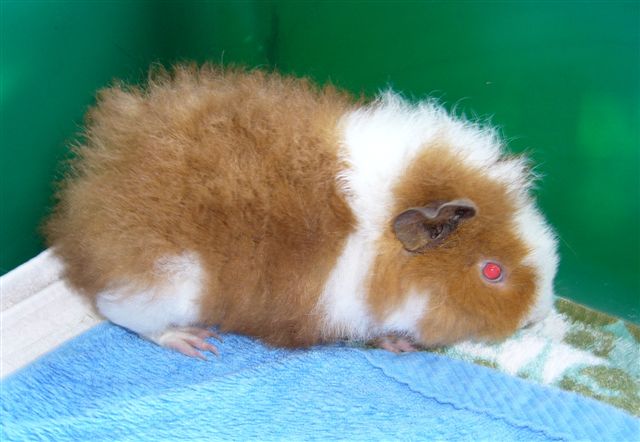
The body should be short and compact, with wide, broad shoulders.
The head should be short with a good width, and in good proportion to the body. It should be at least ¼ of the body length.
The eye should be centred between the ear and nose, not too close to the ear.
General faults: Flat, narrow head, pointed nose, head either too long or too small. Body: waist; narrow shoulders; broad, raised or very flat rump.
Disqualification: Defects/damage to the skeleton.
Ears: The ears should be large and drooping, flat and evenly formed and level with each other. Ears should have good width between them.
General faults: Poor shape or position (?), ears are too small, folded, sticking out, or having minor damage.
Disqualification: missing or badly damaged ear.
Eyes: Large, clear and round.
General faults: Wrong shape, watery/runny eyes, eyelid is either too small, uneven or droopy, early fatty eye (fatty eye not visible without disturbance).
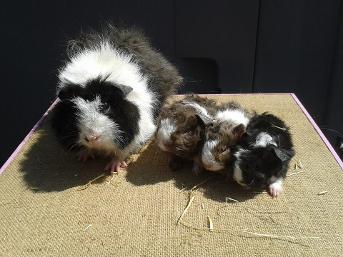
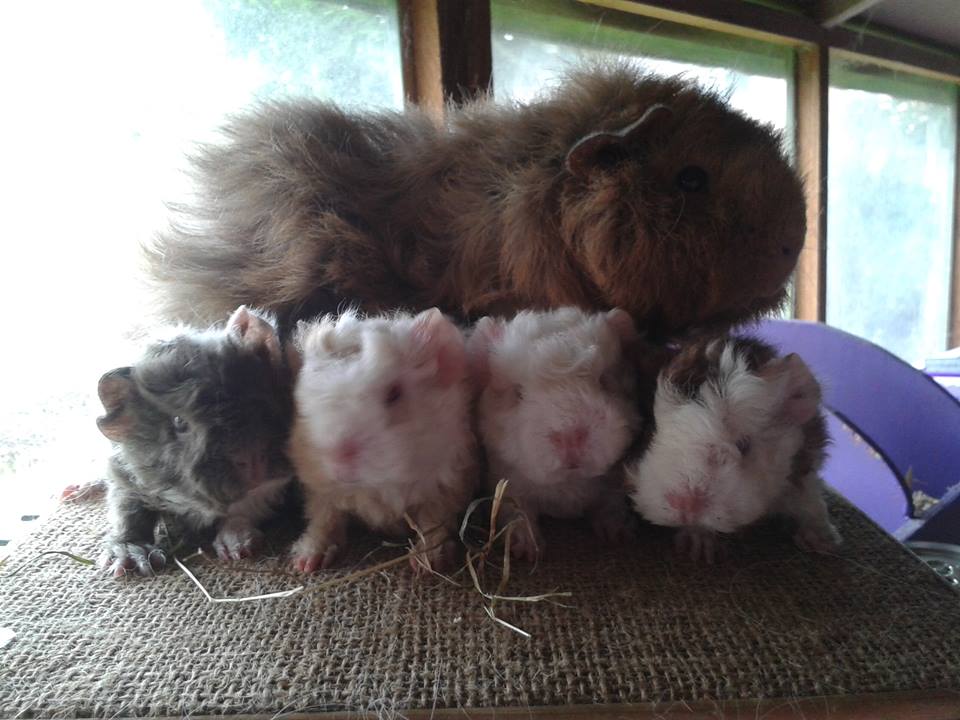
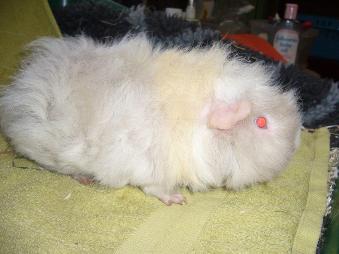
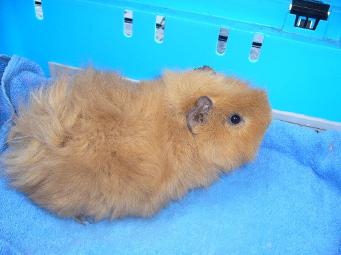
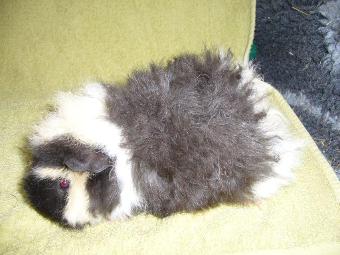
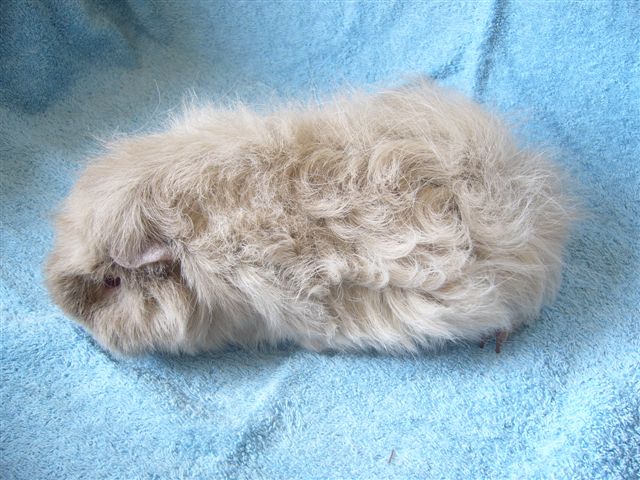
Coat: The coat should be 2-5cm long, upstanding, harsh and curly or wavy.
At the shoulders the coat may be slightly shorter than the back/rear. The coat of young Curlys should be curly. With increasing age the coat should change from being curly to wavy, while at the same time becoming harsher. The belly should stay curly at all times. The hairs on the toes and feet are wavy. A Curly over 12 months can continue to develop harshness. The appearance of the coat depends on the density.
Faults: soft coat for age, sticky or overgroomed coat, poor density and / or lack of curls or waves.
Disqualification: Straight and/or smooth coat.
Density of the Coat:
The coat should be dense and strong over the whole body.
Faults: Uneven or thin coat, except on young animals.
The Curly should have two hip rosettes placed at equal height and close together. From these rosettes the coat grows in the direction of the head. The beard of the cheek/sideburn should be upstanding due to the density of the coat.
Most common faults: Uneven coat and missing hair tips, chewed or split/frayed. Minor damage to the coat. Weak ‘Beard of the Cheek’ ** /sideburn
Disqualification: The coat is too short.
Visible additional rosettes cover the hip rosette, missing rosette, major hair loss.
** This term had no obvious English equivalent. ‘Beard of the Cheek’ is a literal translation, and I found ‘sideburn’ when I put it through Babelfish. Looking at the pictures on the original, it looks as if the strength and density of the coat pushes forward and forms sort of frill at cheek level.
Translated from the German by Bianca Wolf-Lampard, with the assistance of Penny Bell.
Judges Notes for show day
Curly - A short haired Lunkarya
In the adult the coat to be 2-5 cms long, upstanding, harsh and curly or wavy depending on age (coat of young Curlys to be curly becoming wavy on reaching the adult age group).
The coat to be dense and strong all over the body, with two hip rosettes ideally placed at an equal height and close together. From these rosettes the coat grows in the direction of the head.
The beard of the cheek/sideburn should be upstanding due to the density of the coat.